Quick Overview
Temporary labor works best when the job is clearly defined, can be learned quickly, and does not require deep company knowledge or specialized credentials. Your core employees should remain focused on work that depends on experience, technical expertise, decision-making authority, customer relationships, or long-term knowledge of the operation.
A practical way to divide the work is to ask:
- Does the task require specialized training, licensing, or certification?
- Can someone understand the assignment with a short, clear briefing?
- Does the work require knowledge of your company's systems or processes?
- Would assigning a core employee to the task pull them away from more valuable work?
- Is the workload temporary, project-based, or inconsistent?
- Can the task be supervised without creating more work than it saves?
- Are the worker's training, equipment, and safety requirements clearly understood?
Businesses often think about staffing in terms of headcount. A more useful question is what work actually needs to get done, and who is best positioned to handle it.
Two employees can both be busy for eight hours and still create very different amounts of value for the business. A warehouse supervisor spending part of the shift unloading a truck is technically productive, but that may keep them from managing throughput, resolving inventory issues, or supervising the rest of the floor. A construction foreman helping move materials may keep things moving temporarily, but it also pulls an experienced employee away from coordination and project oversight.
That is where temporary labor can make sense. The goal is to identify work that can be separated from the responsibilities that require your experienced employees' knowledge, skills, and authority.

Need Extra Hands Without Adding Permanent Headcount?
Laborjack provides flexible labor for construction, warehouses, events, property management, and other operational needs.
Explore Staffing ServicesGood Temporary Labor Tasks Have Clear Boundaries
Temporary workers are easiest to integrate when the assignment has a clear beginning, clear expectations, and a clear definition of what success looks like.
That does not mean the work has to be easy. It means the work should be understandable without weeks of onboarding or extensive knowledge of your business.
Repetitive or Standardized Work
Tasks that follow a repeatable process are often well suited for temporary labor.
In a warehouse, that might include picking and packing, loading and unloading, staging materials, organizing inventory, or general warehouse support. Laborjack's warehouse staffing services are designed around this type of operational labor.
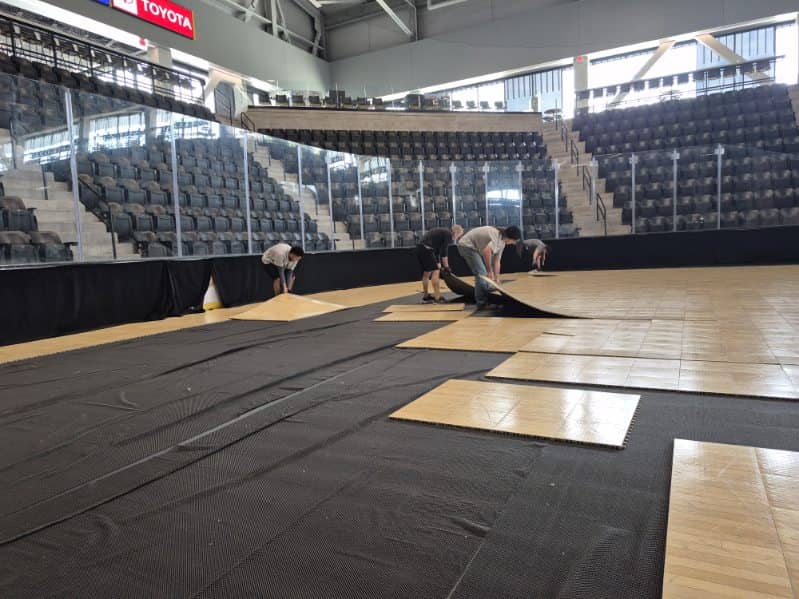
At an event, repeatable responsibilities might include moving furniture, setting up tables and displays, assisting with guest check-in, handling load-in or load-out, and helping return the venue to its original condition after the event.
The more clearly you can explain the process, the easier it is for someone new to contribute effectively.
Work That Creates a Temporary Labor Spike
Some work exists only because a project, delivery, event, or deadline creates a temporary increase in workload.
You may need six extra workers for a large delivery but have no need for them the following week. An event producer may need a large setup crew for one afternoon. A contractor may need additional hands during demolition, material staging, or cleanup while several phases of a project overlap.
Those situations can be a natural fit for temporary labor because the additional headcount is tied directly to the workload. Hiring permanent employees for a short-term need can leave you carrying unnecessary payroll once the work is complete, while pulling existing employees from their primary responsibilities can create another bottleneck somewhere else.
General Labor That Pulls Skilled Employees Away From Their Primary Work
This is one of the clearest signs that task allocation needs attention.
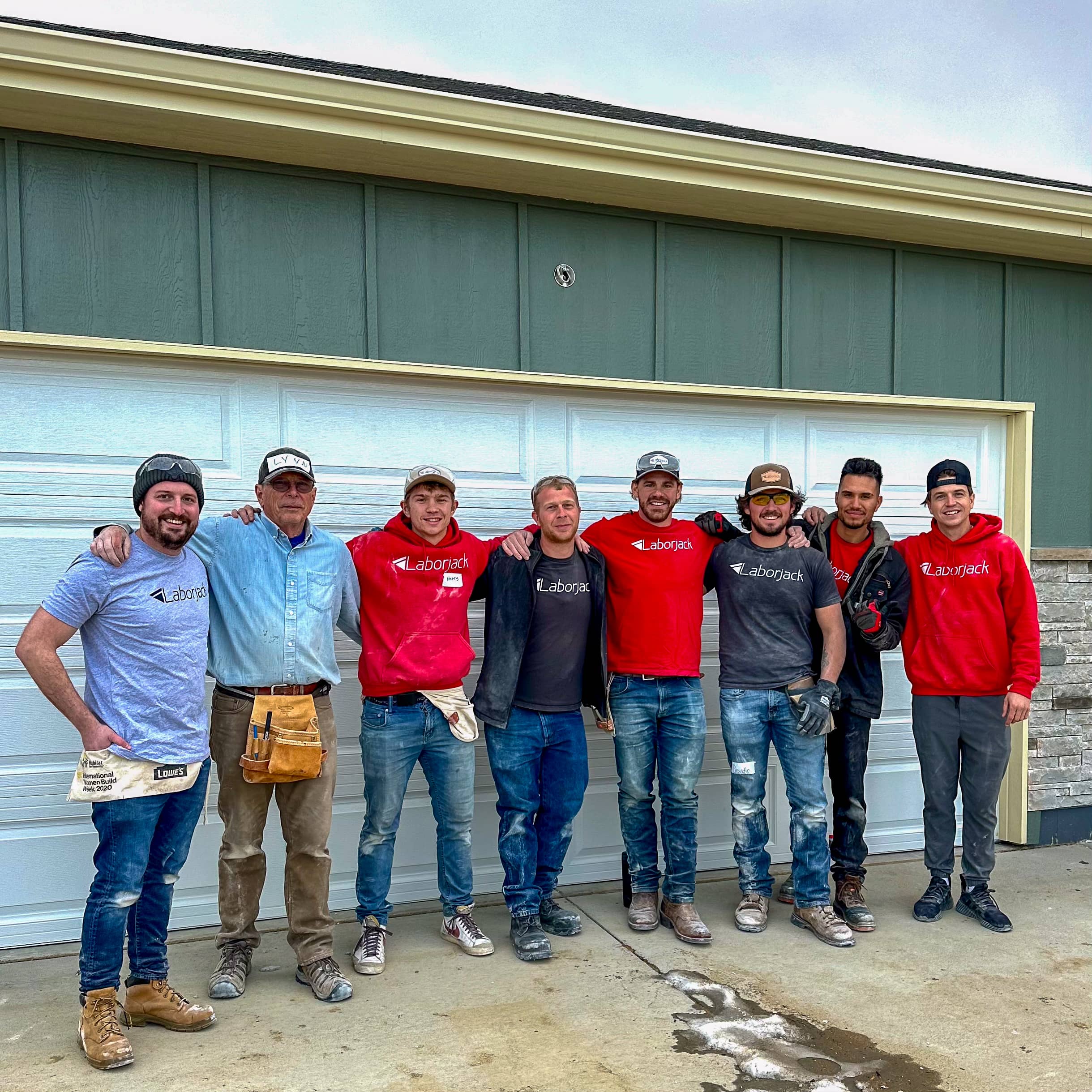
Consider a construction crew. Skilled employees may be capable of moving materials, clearing debris, staging supplies, or helping with general site preparation. The question is whether that is the best use of their time.
Construction staffing support can provide additional hands for appropriate general labor responsibilities such as material movement, load-in and load-out, debris cleanup, demolition assistance, landscaping support, and site preparation.
That allows experienced employees to remain focused on the work that depends on their training and experience.
Work That Usually Belongs With Your Core Employees
Temporary labor has limits. Some responsibilities should remain with permanent employees because the business depends on their expertise, authority, relationships, or long-term knowledge.
Specialized, Licensed, or Highly Technical Work
If a task requires a professional license, specialized certification, substantial technical training, or extensive job-specific experience, treat it differently from general labor.
Construction is an obvious example. General jobsite support and material handling are very different from assigning someone to perform specialized trade work.
The same distinction applies in warehouses and industrial environments. Some equipment and tasks require specific training or authorization before a worker can perform them safely.
Temporary labor should be assigned based on the actual requirements of the work, not simply because another person is available.
Management and Decision-Making
Temporary workers can support an operation, but your core team should maintain responsibility for managing it.
Supervisors understand priorities, schedules, procedures, personnel, customers, and the consequences of changing direction. Those responsibilities require context that someone working a short assignment is unlikely to have.
A temporary event crew can move furniture, prepare spaces, support registration, and assist with teardown. The event manager should still decide where resources need to go and how changes to the schedule should be handled.
Event staffing services work best when the event team provides clear leadership and temporary workers provide the additional operational capacity needed to execute the plan.
Work That Depends on Institutional Knowledge
Some jobs look straightforward from the outside but depend heavily on knowledge accumulated over time.
A warehouse employee who understands where unusual inventory is stored, how exceptions are handled, or which customers have special requirements provides more than physical labor. A project manager who knows the history behind a jobsite decision cannot be replaced simply by adding another worker.
When the task depends heavily on knowing how your particular business operates, a permanent employee is usually the better choice.
Important Customer or Client Relationships
Customer-facing work can sometimes be staffed temporarily, particularly when responsibilities are clearly defined. However, important relationships and high-impact conversations generally belong with people who understand the customer, company expectations, and long-term implications of the interaction.
Temporary labor can support the operation surrounding the customer experience. Your core team should usually own the relationship itself.
Safety and Training Should Be Part of the Decision
Task allocation also has to account for workplace safety.
Temporary workers do not operate under a different set of safety expectations simply because their assignment is short. OSHA's temporary worker guidance states that staffing agencies and host employers share responsibility for protecting temporary workers, including responsibilities related to training, hazard communication, and workplace safety.
The host employer is also typically in the best position to explain hazards that are specific to its workplace, equipment, and procedures.
Before assigning temporary labor, determine:
- What hazards are associated with the task?
- What site-specific training is required?
- What personal protective equipment is necessary?
- Does the assignment involve equipment requiring specific training or authorization?
- Who will supervise the worker?
- What should the worker do if conditions or responsibilities change?
A temporary worker arriving for one assignment should not suddenly be moved into unrelated work without considering whether the training and safety requirements have changed.
Clear job descriptions matter. If you know exactly what workers will be doing before the shift begins, the staffing provider can better match workers to the assignment and everyone can prepare appropriately.
Use a Simple Task Test Before Adding Temporary Workers
You do not need a complicated staffing model to determine whether temporary labor fits a particular assignment. Run the work through four questions.
1. Can the Task Be Clearly Defined?
You should be able to explain what the worker will be doing, when the work starts, where it takes place, and what completion looks like.
If the assignment changes constantly or depends heavily on independent judgment, it may require someone with deeper operational knowledge.
2. Can the Worker Become Productive Quickly?
Consider how much instruction is required before useful work begins.
A task that takes an hour to explain and several days to learn may be a poor fit for a one-day assignment. A task that can be explained during a structured jobsite orientation may work well.
3. Does the Work Require Specialized Qualifications?
Identify licenses, certifications, equipment requirements, safety training, physical requirements, and prior experience before requesting workers.
Do this before the shift rather than discovering requirements after someone arrives.
4. What Is the Opportunity Cost of Using Your Core Team?
This question is often overlooked.
If your warehouse manager spends three hours unloading materials, what work did they stop doing? If your event producer spends the morning moving tables, who is coordinating vendors? If skilled construction workers handle cleanup for half the afternoon, what higher-value project work is delayed?
Sometimes using your existing employees looks cheaper because no additional labor invoice appears. The operational cost can still be significant.
Temporary Labor Should Support Your Core Team
The strongest use of temporary labor is usually supplemental.
Your core employees provide the knowledge, technical ability, leadership, and continuity that keep the business operating. Temporary workers give that team additional capacity for work that does not require the same level of institutional knowledge or specialization.
That can mean adding workers for a single shift, covering a defined project, supporting a large event, handling an unusual delivery, helping during a busy production period, or providing general labor while your experienced employees stay focused on their primary responsibilities.
Laborjack provides vetted, background-checked workers for general labor assignments across construction, warehousing and logistics, events, property management, and other operational environments.
Have Work That Needs Extra Hands?
Tell Laborjack what the assignment requires and when you need workers. We can help you determine the right temporary labor setup for your project or operation.
Request a Staffing QuoteFrequently Asked Questions
What kind of work is best for temporary labor?
Temporary labor is usually best suited for clearly defined work that can be learned relatively quickly and does not require substantial institutional knowledge. Common examples include general labor, material handling, loading and unloading, warehouse support, event setup and teardown, cleanup, and appropriate construction support tasks.
Should temporary workers replace permanent employees?
Temporary labor is commonly used to supplement an existing workforce. Businesses can add workers when workload increases, a project requires additional hands, or specific operational tasks are pulling permanent employees away from their primary responsibilities.
When should work stay with a permanent employee?
Work should generally stay with core employees when it requires substantial company knowledge, management authority, specialized expertise, important customer relationships, or significant long-term training.
Can temporary workers perform construction work?
Temporary workers can support appropriate general construction labor such as material movement, debris cleanup, load-in and load-out, demolition assistance, landscaping support, and site preparation. Businesses should distinguish these responsibilities from specialized or licensed trade work.
Can temporary workers work in warehouses?
Yes. Temporary warehouse labor can support picking and packing, loading and unloading, material movement, staging, fulfillment, organization, and other appropriate warehouse tasks. Equipment operation and specialized duties may require additional qualifications or training.
Can temporary workers help at events?
Temporary event workers can support setup and teardown, furniture movement, load-in and load-out, check-in, ticket taking, venue support, crowd assistance, and other defined event responsibilities.
Who is responsible for training temporary workers?
Responsibilities depend on the workplace and assignment. OSHA states that staffing agencies and host employers share responsibility for temporary worker safety, while host employers are generally best positioned to provide training related to hazards and procedures specific to their worksite.
How detailed should a temporary labor job description be?
Include the actual tasks, shift time, location, physical requirements, necessary equipment, required experience, safety expectations, dress or PPE requirements, and who will supervise the work. Clear expectations make it easier to match workers appropriately and reduce confusion after the shift begins.
How do I know if temporary labor will actually save my team time?
Look at what your existing employees would otherwise be doing. If experienced employees or managers are repeatedly pulled away from higher-value responsibilities to handle general labor, temporary workers may create additional capacity without requiring permanent headcount.
How far in advance should I request temporary workers?
Lead time depends on the assignment, number of workers, location, and job requirements. Providing complete job details as early as possible gives the staffing provider more information to match workers appropriately, especially when the assignment requires particular experience or equipment.